


Simulation Nurse Call System: A Professional Training Solution from the Manufacturer
As global healthcare education standards continue to rise, medical training institutions and hospitals are placing greater emphasis on realistic, system-level simulation environments. From the perspective of a professional manufacturer and solution provider, the Simulation Nurse Call System has become a core component in modern nursing education, clinical skills labs, and hospital training centers.
Unlike consumer-oriented products, a Simulation Nurse Call System is a B2B training solution that must meet strict requirements for reliability, scalability, system compatibility, and long-term deployment. For nursing schools, teaching hospitals, and system integrators, choosing the right supplier is just as important as selecting the right technology.
This article explains the Simulation Nurse Call System from a manufacturer’s and factory-direct supplier’s perspective, focusing on system value, application scenarios, and project-level advantages.
What Is a Simulation Nurse Call System (B2B Perspective)?
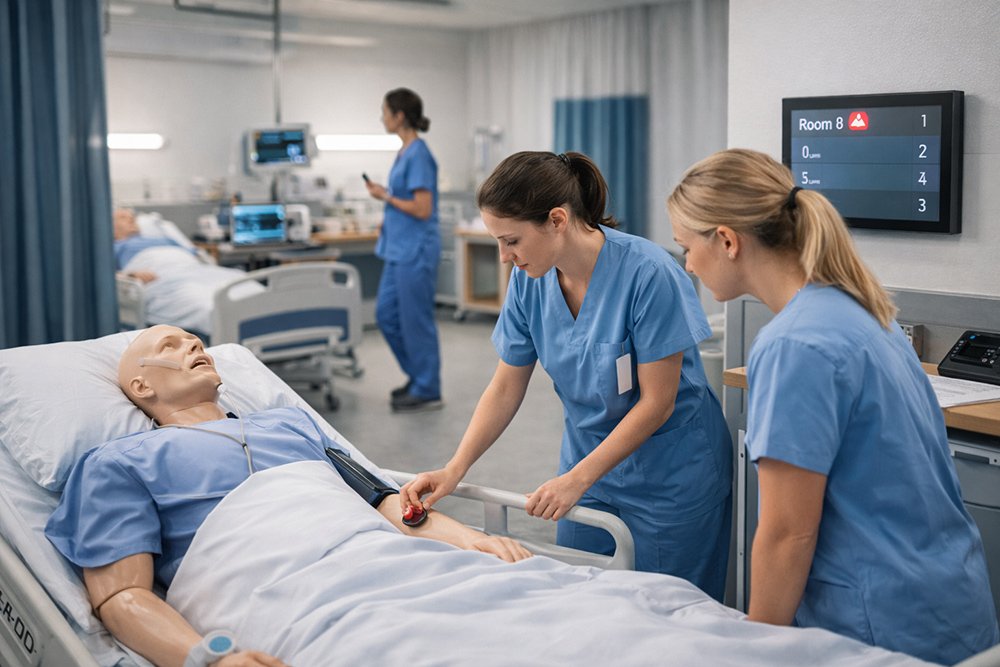
A Simulation Nurse Call System is a professionally engineered training system designed to replicate real hospital nurse call workflows in educational and non-clinical environments. From a manufacturing standpoint, it is not a simplified demo tool, but a fully functional system architecture aligned with real hospital installations.
These systems are deployed in:
Nursing schools and medical universities
Hospital training departments
Clinical skills and simulation centers
Vocational healthcare institutes
As a factory-level solution, the system supports modular configuration, bulk deployment, and customization, making it suitable for both small training rooms and large simulation labs.
Why Institutions Choose Manufacturer-Direct Simulation Systems
From the B2B buyer’s perspective, simulation systems are long-term investments. Institutions require stability, technical support, and future scalability.
A factory-direct Simulation Nurse Call System offers:
Consistent product quality and system compatibility
Flexible OEM / ODM customization
Stable long-term supply for expansion projects
Lower total cost of ownership for bulk procurement
By sourcing directly from the manufacturer, buyers avoid compatibility risks and fragmented systems often caused by mixed suppliers.
System Architecture Designed for Training Projects
A professionally designed Simulation Nurse Call System follows real hospital logic while remaining adaptable for training use.
Simulated Patient Call Units
Installed at bedside training stations or simulation mannequins, these units support routine calls, emergency alerts, and scenario-based triggers.
Nurse Stations and Call Displays
Centralized nurse stations receive and manage multiple calls simultaneously, training students to prioritize tasks under real working conditions.
Corridor Lights and Visual Indicators
Visual signaling devices reinforce real hospital workflows and improve situational awareness during training.
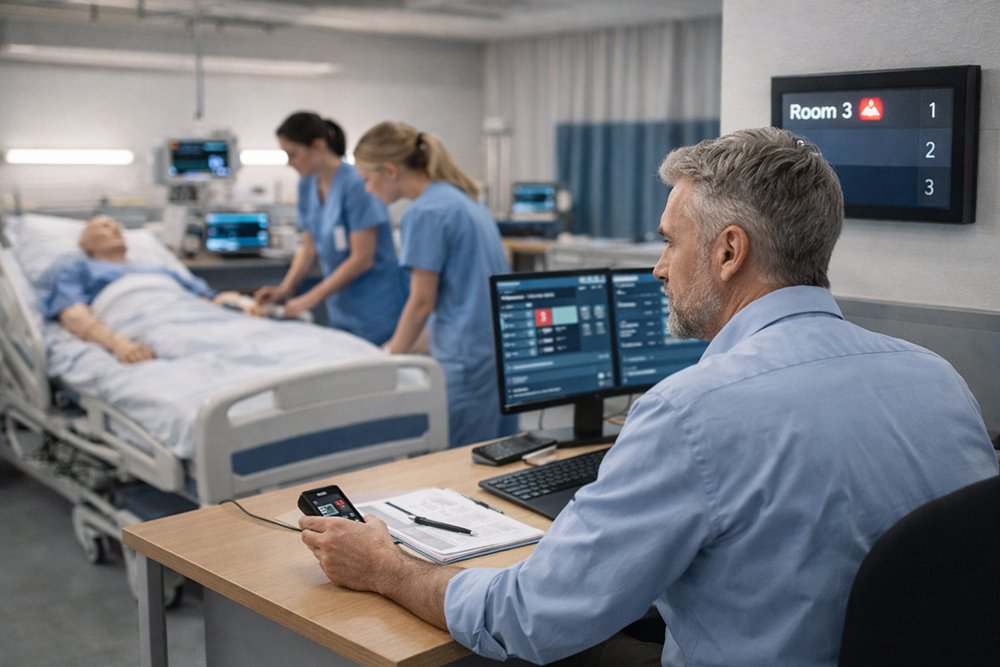
Instructor Control and Management Software
From a system supplier’s perspective, this is the core value module. Instructors can define scenarios, control call logic, monitor responses, and export performance data.
This architecture allows institutions to simulate real-world operations while maintaining full training control.
How Simulation Nurse Call Systems Support Scalable Training
For B2B clients, scalability is a critical factor. A Simulation Nurse Call System must support phased deployment.
Typical project scenarios include:
Initial installation for a single training ward
Expansion to multiple classrooms or floors
Integration with broader medical simulation platforms
Factory-designed systems support modular expansion, allowing new call units, displays, or software licenses to be added without redesigning the entire system.

Key Advantages from a Manufacturer’s Viewpoint
Real-Hospital Logic, Training-Oriented Design
Systems are engineered based on real hospital nurse call standards, ensuring students train on workflows they will use in real facilities.
Custom Configuration for Different Markets
Manufacturers can adapt system voltage, communication protocols, languages, and interface layouts for different countries and regions.
OEM and Private Label Support
For distributors, integrators, or education equipment brands, OEM branding and interface customization are available.
Stable Supply for Bulk Orders
Unlike retail products, simulation systems often require synchronized delivery for large projects. Factory production ensures consistency across all units.
Typical B2B Applications
Nursing Schools and Medical Universities
Institutions use simulation systems to standardize training across multiple student groups and academic years.
Hospital Training and Onboarding
Hospitals deploy simulation nurse call systems to train new staff before allowing access to live patient environments.
Healthcare Simulation Centers
Large training centers integrate nurse call simulation into multi-system teaching environments, including patient monitoring and emergency response.
System Integrators and Project Contractors
Simulation Nurse Call Systems are often part of larger medical education or hospital infrastructure projects.
Simulation Nurse Call System vs Live Nurse Call System
From a supplier’s standpoint, the distinction is clear:
Live nurse call systems prioritize 24/7 uptime and patient safety
Simulation nurse call systems prioritize flexibility, control, and training repeatability
Simulation systems allow instructors to pause, reset, and repeat scenarios—features not possible in live clinical environments.
What B2B Buyers Should Consider When Selecting a Supplier
When sourcing a Simulation Nurse Call System, professional buyers should evaluate:
Manufacturer experience in nurse call systems
System compatibility with real hospital installations
Customization and OEM capability
Technical documentation and training support
After-sales service and long-term availability
A reliable factory partner ensures system continuity for years of training use.
The Future of Simulation Nurse Call Systems in Medical Education
As healthcare education becomes more standardized globally, simulation systems will play an even greater role. Manufacturers are increasingly integrating:
Data analytics for performance evaluation
Software-based scenario management
Compatibility with smart hospital platforms
For B2B buyers, this means choosing a supplier capable of continuous system evolution.
Conclusion: A Strategic Investment for Training Institutions
From a manufacturer and source-factory perspective, a Simulation Nurse Call System is more than a teaching tool—it is a strategic infrastructure component for modern medical education.
By choosing a factory-direct, professionally engineered solution, nursing schools, hospitals, and training centers gain a reliable, scalable, and future-ready system that supports consistent training outcomes and long-term operational efficiency.
 MEEYI
MEEYI