


RF Wireless Call System: A Complete Guide for Modern Service Communication
In fast-paced service environments, clear and instant communication is essential. Whether in hospitals, restaurants, factories, or care facilities, delays in response can directly affect service quality, safety, and customer satisfaction. This is where an RF Wireless Call System plays a critical role.
An RF Wireless Call System provides a flexible, cable-free way to send alerts, service requests, and emergency signals in real time. Because it relies on stable radio frequency technology, it delivers reliable performance without the complexity of traditional wired systems. As a result, it has become a preferred communication solution across many industries.
This article explains how an RF Wireless Call System works, where it is used, and why it is a smart investment for modern service operations.
What Is an RF Wireless Call System?
An RF Wireless Call System is a communication system that uses radio frequency signals to transmit call or alert messages between devices. Instead of using physical wiring, it connects call buttons, receivers, displays, and pagers wirelessly.
In most systems, a user presses a call button or trigger device. The signal is transmitted via RF to a receiver, display screen, pager, or central unit. The receiving device then alerts staff through sound, light, vibration, or on-screen information.
Because RF signals are stable and resistant to interference, these systems perform well even in busy or noisy environments. More importantly, they are easy to install and expand.
Key Components of an RF Wireless Call System
Although configurations vary by application, a typical RF Wireless Call System includes the following components:
Call Buttons or Transmitters
These devices are installed at service points such as patient beds, tables, counters, or workstations. Users simply press a button to send a call or request.
Receivers and Displays
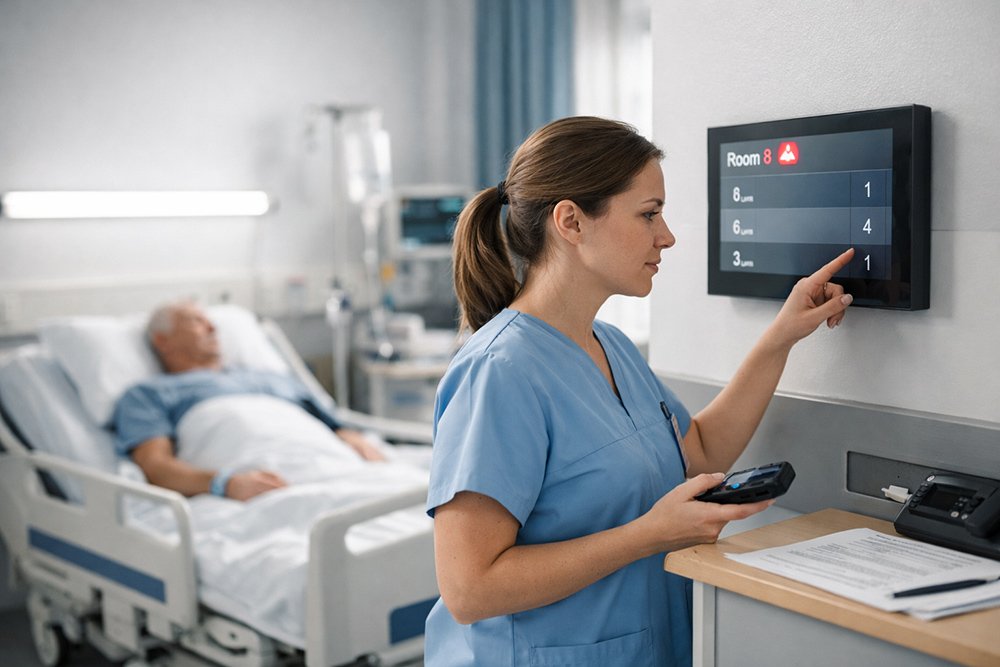
Receivers collect RF signals and convert them into visual or audible alerts. Displays may show call numbers, room numbers, or service codes for easy identification.
Pagers or Portable Receivers
In some systems, staff carry pagers that vibrate or beep when a call is received. This allows mobility and faster response.
Central Management Unit (Optional)
Advanced systems include software or control units for logging calls, prioritizing alerts, and analyzing response data.
Together, these components create a responsive and efficient communication loop.

How an RF Wireless Call System Works
The operation process of an RF Wireless Call System is simple and efficient:
A customer, patient, or staff member presses a call button
The button sends an RF signal to the receiver
The receiver activates alerts on displays or pagers
Staff receive the notification and respond accordingly
Because the system does not rely on wired connections, signal transmission is fast and stable. In addition, most systems support multiple channels to avoid signal overlap or interference.
Major Advantages of RF Wireless Call Systems
Easy Installation and Low Cost
One of the biggest advantages of an RF Wireless Call System is ease of installation. Since no wiring is required, setup time is short and labor costs are reduced. This makes it ideal for existing buildings and temporary installations.
Flexible Expansion
As business needs grow, new devices can be added without changing the existing infrastructure. This scalability is especially valuable for growing facilities.
Reliable Communication
Modern RF technology offers strong anti-interference performance and long transmission distances. As a result, communication remains stable even in complex environments.
Improved Response Time
Instant alerts help staff respond faster. This improves workflow efficiency and reduces waiting time for customers or patients.
Enhanced Service Experience
Clear communication leads to better organization, reduced confusion, and a more professional service image.
Applications of RF Wireless Call Systems
Healthcare and Nurse Call Systems
In hospitals, clinics, and nursing homes, an RF Wireless Call System allows patients to request assistance quickly. Nurses receive alerts immediately, which improves patient safety and care quality.
Restaurants and Food Service
Restaurants use RF wireless call systems for table service, kitchen alerts, and guest paging. This reduces shouting, improves coordination, and enhances the dining experience.
Factories and Warehouses
In industrial environments, workers use call buttons to request materials, maintenance, or support. This improves operational efficiency and reduces downtime.
Hotels and Hospitality
Hotels use wireless call systems for service requests, housekeeping coordination, and guest paging, especially in large or multi-floor facilities.
Elderly Care and Assisted Living
For elderly care centers, fast communication is critical. RF wireless call systems provide a simple and reliable way for residents to call for help.

RF Wireless Call System vs Wired Call Systems
Compared with traditional wired systems, an RF Wireless Call System offers several clear advantages:
No wall breaking or cable installation
Faster deployment and lower installation cost
Easier system upgrades and expansion
Better adaptability to changing layouts
While wired systems may still be suitable for certain fixed installations, RF wireless solutions are generally more flexible and cost-effective.
Choosing the Right RF Wireless Call System
When selecting an RF Wireless Call System, consider the following factors:
Transmission range required
Number of call points and receivers
Signal stability and anti-interference capability
Scalability and future expansion
Compatibility with displays, pagers, or software
A well-designed system should match your operational needs while allowing room for growth.
Future Trends in RF Wireless Call Systems
As smart facilities continue to evolve, RF Wireless Call Systems are becoming more intelligent. Integration with IoT platforms, data analytics, and centralized management software is increasingly common.
In the future, these systems will not only send alerts but also provide actionable insights into response times, service bottlenecks, and staff performance. This data-driven approach will further improve efficiency and service quality.
Conclusion
An RF Wireless Call System is a powerful communication tool for modern service environments. With easy installation, reliable performance, and flexible scalability, it helps organizations improve response speed, optimize workflow, and enhance user experience.
Whether used in healthcare, hospitality, industrial, or public service settings, an RF Wireless Call System delivers clear value. For businesses seeking efficient, cable-free communication solutions, it remains a smart and future-ready investment.
 MEEYI
MEEYI